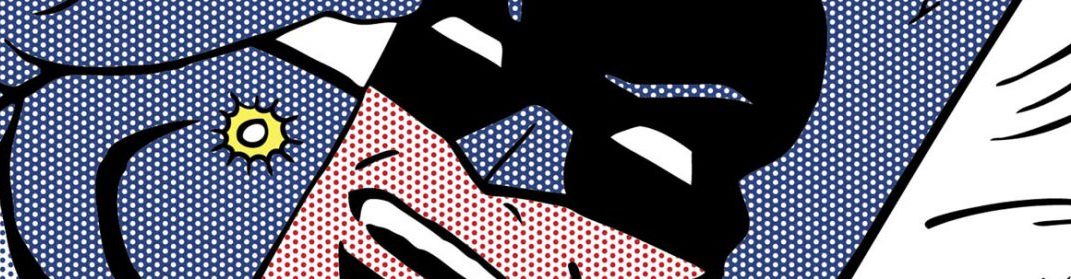

“What we’re talking about here is a billionaire aristocrat who beats up poor people, as well as the mentally ill. I don’t know what that has to do with a code of honor, but it certainly appeals to my sense of humour…”
I love Batman as much as at least one of my three kids (which one changes daily), but it’s also important to keep an open mind about the character. As I’ve said since the start, there is no such thing as a “definitive” Batman.
So reading that quote from Garth Ennis, writer of Batman: Reptilian, got me more than a little excited. Ennis’ superhero-adjacent books (Hitman, The Boys) have specialized in lampooning the entire concept of caped crusaders, run through with a biting edge of satirical commentary and the occasional lapse into genuine affection for the characters. For Ennis, the mere idea of superheroes is insane; most of the people who do it are also insane; and any sensible person who wants to save the world has the good sense not to tart up in a crazy costume to do it (to paint with a broad brush!).
With Batman: Reptilian #1, Ennis is definitely laying the groundwork for a fully satirical take on Batman, one that feeds off the most extreme expressions of his modern depiction in comics, but keeps him just grounded enough for the story to carry a hint of danger. It stops just short of being an outright lampoon, although Liam Sharp’s artwork creates an exaggerated atmosphere; Ennis and Sharp both seem to want the violence to land, to be just “real” enough to matter, in order to make Batman’s reflection in the funhouse mirror all the more biting.
Someone is attacking Batman’s rogues in Reptilian, in grotesque acts of violence that Batman doesn’t seem to realize are a logical extension of the violence he himself has brought upon the criminal world. A short prologue depicts Batman crippling an acquitted but guilty rapist on the steps of the courthouse in broad daylight, a moment that sets the tone for Batman’s character in the book–deluded enough to think his borderline psychotic attacks are always commensurate with the crime he is trying to prevent.
That undercurrent has been in the Batman books for a few decades at least, but Ennis is pulling it out from beneath the character’s inciting trauma and examining it in dim, cold daylight.
Ennis meant for this script to be drawn by Steve Dillon, his co-conspirator on Preacher, Hellblazer and The Punisher, before the artist’s untimely death in 2016. It’s bittersweet to imagine the pages done by Dillon, but this also feels so completely within Sharp’s wheelhouse that it takes on its own full identity. It reminded me of Dave McKean on the Arkham Asylum graphic novel; impressionistic but tactile, splotches of color and light pulling focus from within a turgid morass.
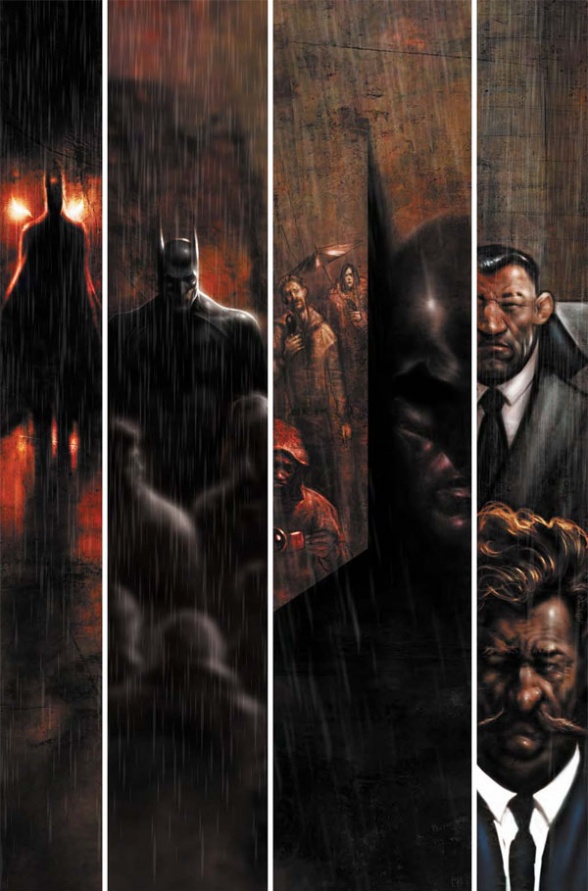
That’s somewhat appropriate, because as Ennis himself reveals, “Perhaps the best way for regular Batman readers to think of the book is this: Imagine that the last thirty or so years’ worth of Batman comics never existed. Because as far as I can recall, that’s how long it’s been since I actually read a Batman comic from start to finish…Just think Dark Knight, Year One, Killing Joke and not an awful lot more. Think the late ‘80s to the early ‘90s. That’s really when Liam and I hail from.”
With Reptilian, Ennis is taking that incarnation of Batman and deflating his outsized Dark Knight status, using his own tone and universe as weapons against him. Considering how twisted and poisonous that take on Batman became almost immediately upon release, it’s a thrashing long overdue.
 Oonta Goota