Songs of 2024: Kate Pierson, Michigander, Lemonheads

“Evil Love,” Kate Pierson

Fans of the B-52s have known for years that Kate Pierson is a world-class belter, but here she is at age 76, still singing like she has something to prove. “Evil Love” was one of the leadoff singles from her second solo album, and it’s a miniature pop gothic mansion of passion and intrigue. It’s a theatrical song; there’s real feeling here, but Pierson’s also playing a role, occupying an emotional space like any great singer would. 

“Giving Up,” Michigander 

Michigander is the nom-de-project of singer-songwriter Jason Singer; his specialty is spacious, catchy pop-rock, constructed around his distinctive, yearning vocals. There’s a distance in how Singer arranges the pieces of his musical constructions; you can imagine yourself climbing into the song and wandering through for a while, but there are clear boundaries, and you’ll eventually make it home okay. Here he interpolates an opening riff from Billy Joel’s “It’s Still Rock ‘n’ Roll To Me” and points his band straight toward the sun for 3 minutes and fifteen seconds of big hooky heartbreak. Like all those who came before, he’s able to make it sound committed and careless, an off-hand kiss-off that masks the usual bitter sorrow. 

“Seven Out,” The Lemonheads 

If Michigander is an artist chomping at the bit to claim his corner of the modern pop landscape, then Evan Dando is perennially lost around the fringe, wandering through the wilderness as he assembles twigs and berries into something that resembles a song. He can’t help but craft catchy guitar-driven alternative tunes, even when there’s little lyrical clarity and the vocal borders on exhausted. “Seven Out” is a compelling listen because of those aforementioned hooks, but also because you can almost hear Dando losing interest in his own song as he plays it. 

In recent years, Dando has performed at varying levels of coherence as he plays his way through his own never-ending tour. His last album came out in 2020, and he’s spent most of the past few years trying to capitalize on the recent anniversaries of some of the Lemonheads’ iconic 90s releases. It’s hard to understand why a single like this exists–scratch that, why a “b-side” like this exists; it’s not even the A-side. (The A-side, “Fear of Living,” has more of a pulse but also feels like more of a failed attempt to capture old lightning in a bottle.) “Seven Out” gives one pause, if you give it a few minutes, because the same indie nonchalance that made Dando a 90s alternative darling now reads as outright exhaustion.
Songs of 2024: “Please Please Please,” Sabrina Carpenter

I don’t know of any elegant way to say this: I find myself really enjoying music that I am probably too old and too male to enjoy. 

I know, I know: We can all love what we love. But artists like Chappell Roan and Olivia Rodrigo are most certainly Not For Me. They’re for my daughters, and I appreciate that, because they’re making good music with good messages and I’m glad my kids have that in their lives. 

When I personally crank “Vampire” or “Good Luck, Babe” in the car by myself as I drive to pick up Chipotle and I just happen to know all the words…I’m not sure what to make of that. Perhaps the less examined, the better. 

Honestly, I just like the songs. There’s a passel of young female artists who have emerged in the past few years that are making honest, smart, popular music that hits in a way that is both broadly appealing and specific enough to be meaningful. The themes may not relate directly to my life, but I can’t deny the craft and I’m drawn in by how great the songs are. 

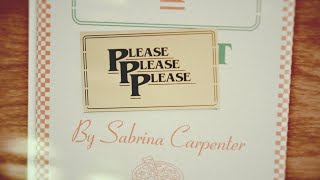
Sabrina Carpenter’s “Please Please Please” might seem easy to dismiss. It has that soft-focus synth sound that is dominating the pop charts right now, the kind of stuff I could have done on my Casio SK-1 keyboard back in the late 80s. Who knows, maybe that’s what they’re using; it’s probably worth $10K now and we probably pitched one in the trash a few summers ago when we cleaned out the basement of my parents’ house. 

That melody, though! Sturdy as a brick shithouse. There are seven versions of the song on the single released earlier this year, including a sped-up and slowed-down version, which are exactly what you’d expect. But the “acoustic” version takes all of Carpenter’s original vocals and puts a simple fiddle, strings and guitar arrangement behind them. You strip away the bleeps and bloops, and the song still shines; the vulnerability of the vocal is exposed, along with the sly toughness. 

That’s what makes the song really special; it is honest, and funny, and tackles a relatable subject with the kind of detail that suggests lived-in experience, whether it’s “true” or imagined for the sake of a lyric. Springsteen has this interview in an old Chuck Berry documentary where he talks about the specificity of a lyric like “She couldn’t unfasten her safety belt” and how it puts you in the car with that character in that moment, right there with his struggle.

“Please Please Please” has that too; the fear of staining makeup with unnecessary tears, encouraging your doofus boyfriend to settle for the ceiling fan’s fresh air so you don’t have to deal with his bullshit. It’s this mix of firm defiance and an attempt at gentle understanding that says the singer is sick of his bullshit but what the hell, she’ll give it another try. Either she just loves him that much or she’s just trying to get out the door without drama. 

I’ve been playing at an open mic here in town, and I was bullshitting with a guy there who was remembering how he dropped acid and listened to The White Album on repeat for fifteen hours. “You really get a lot out of an album when you listen to it over and over like that,” he said. 

I thought back to the last time I did that with music and I realized it was this song. “Please Please Please” on repeat for an afternoon by myself while I pecked away at work. I did get a lot out of it, thanks for asking. 

The Last Great Rolling Stones Song

The last great Rolling Stones song is on their new album, Hackney Diamonds

Maybe it’s just their last “pretty good” song; it’s honestly hard to tell. The Stones exist in rarefied air, their every move somehow a reflection of and a reflection on everything they’ve done before. That’s not a big problem when they’re leading a stadium full of rich boomers through an hour-and-change of their deep catalog of hits. It’s more of a challenge when they deign to release something “new.” 

Everything surrounding this record tends to obscure the music itself, and being as they’re the Rolling fucking Stones, maybe they don’t require or even deserve anyone’s thoughts on anything they do anymore. It’s like trying to come to terms with a new Gospel or something. 

And I’m enjoying this album for what it is to me—a late-era swing through some recurring Stones tropes, delivered with unexpected energy and commitment. The album ends with a one-two-three punch of noteworthy moments—Keith Richards’ lone lead vocal contribution, a gospel-tinged rave-up featuring Lady Gaga and Stevie Wonder, and Mick Jagger and Richards sharing a mic for what’s probably the last time in the studio, on a cover of Muddy Waters’ “Rolling Stone Blues.” 

“Driving Me Too Hard” is the tune before those three, and that’s the one where the rubber really seems to hit the road; the best moments on Hackney Diamonds exist independent of expectations, when the band is doing what they do better than anyone on the planet ever has or ever will. They’re being The Rolling Stones, which to me means a steamy brew of rock, soul, gospel, R&B and pop, one that sounds casual and detached but reveals hidden depths of feeling. 

“Tumbling Dice” is the easiest comparison to make here, and it has a similar melancholy swing, but it’s not a song asking for anything, and there’s not much glamour in the romance it sketches out. “Every time I give a little bit/You muscle in and take it all,” Jagger sings, resigned and a little tired. “You’ve emptied my eyes” is a beautiful image of emotional depletion that recurs in the chorus. 

There are good songs on Hackney Diamonds but right now I’m hearing more moments than anything else—tunes that hold my attention as a fan just long enough for me to get to an alchemy that pulls me in completely. An incredible chorus here, a smoky sax solo there. 

“Driving Me Too Hard” is the Stones firing on all cylinders one last time, in a way that’s both tossed-off and completely committed. Mick’s vocal is incredible and Keith’s harmony vocal is pushed right up next to his on the pre-choruses. The guitars seize down around a white-blues riff, piano colors in the emotional nuances in the background, and three old white British dudes make better music than anyone ever expected they could in the year of our lord 2023.

Mystery Boxes

We discovered From via random targeted social media ads. It’s in its third season and currently airs on a service called MGM+. I’m not sure what MGM “normal” stands for, so the idea that I’m getting “plus” remains confusing to me. I know the lion; is it a bigger lion? A louder roar? 

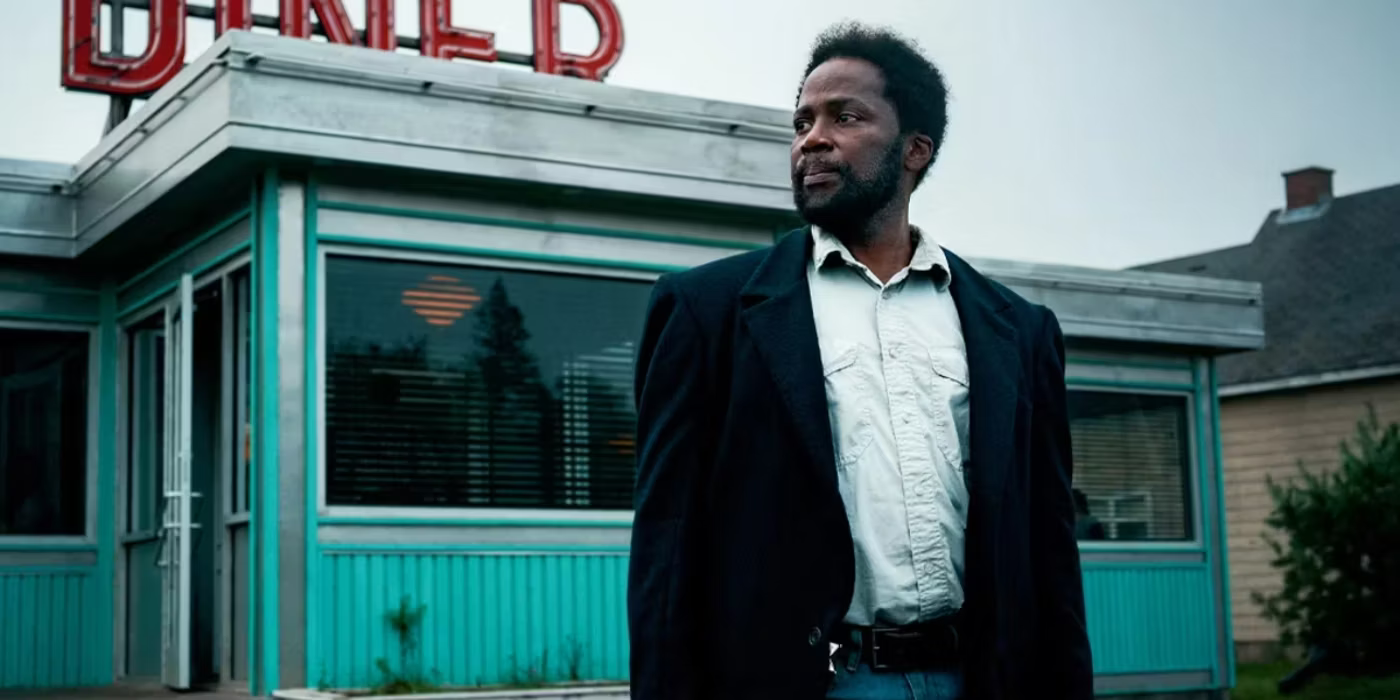
From comes to us from at least one of the producers of Lost, Jack Bender, who also directs a bunch of episodes. It stars Harold Perrineau, a terrific actor who appeared on Lost but was not served well by their storytelling. I didn’t recognize anyone from the rest of the cast; there’s a guy who’s off-brand Paul Rudd, a pushy lady, an annoying kid, etc. They shoot it in Nova Scotia so I assume they paid for Perrineau and then picked up the rest of the cast from local repertory companies. I hope this is a good gig for all of them. 

I admire its purity. It’s a mystery box show that’s far more interested in the box than its victims. It pays enough lip service to character development that we have a pang of concern for these folks as they face outlandish challenges. But it’s really an onslaught of maladies, from food spoiling for no clear reason to the cadre of creepy monsters that only come out at night and are kept at bay by mysterious “talismen” in each of the small community’s homes. 

It’s a partial town, a few houses and a police station and a diner, a little church and some municipal building that’s now a clinic. And it doesn’t seem to really exist even though it does; the people who arrive there are never able to leave. They disappear from the point of view of the “real world.” 

There’s a creepy backstory that’s being slowly unveiled, weird caves with dead children walking around, a phone that only receives calls from the dead. Is there some mystical anguish deep in the soil of this place that is no place? Or is it a malevolent force torturing these souls with a deliberate menu of tricks and deceptions? 

Do I care? I don’t think so. I watch From while I scroll on my phone. I occasionally surface to keep up with the latest tragedy to befall these poor people I barely know. Recently after their crops mysteriously spoiled, the night monsters (who are all dressed up like 1950s stereotypes, the milkman and the cheerleader and so forth) petulantly let all the goats and cows out of their confines. This forced the residents to leave their homes at night to save the animals, and thus make themselves available for slaughtering. 

Ultimately, this led to Perrineau’s long-suffering town sheriff tied up in a barn watching a sweet old Korean lady being graphically murdered by these monsters, while he could do nothing to stop them. It’s basic cable levels of gore, so it’s not like torture porn…more like torture Cinemax Friday After Dark. 

It can be a brutal show, but horror in general can be brutal; the “mystery box” of it all adds a level of compulsion, if you are the kind of person to be drawn into these sort of things. That’s why I admire its purity; it’s not ashamed of what it is, and it doesn’t try really to elevate itself. There’s not a lot of deeper mystical meaning. 

That’s not to diminish what it does. It effectively maintains these mysteries in a way that suggests there is an answer (although fool me twice, shame on me). The actors bring credibility and grit to the scripts. It invites you to climb into the mystery box, but it’s also easy to climb back out when it’s over, and move on with the broader mystery box of human existence. 

Indeed I Do

Frank Wilson joined the team at Motown in 1963, first helping staff their Los Angeles office before relocating to Detroit to write and produce. He worked with Stevie Wonder, the Temptations, Marvin Gaye, the Four Tops. He helped shepherd a late-sixties renaissance for Diana Ross and the Supremes, including “Love Child” and “Stoned Love.” In 1976, he left Motown to become a minister and gospel music producer. He died in 2012 at age 71. 

He also wrote and sang one of the rarest and most coveted soul singles ever. “Do I Love You (Indeed I Do)” was cut in 1965 for Motown’s subsidiary label Soul. There were 250 demo copies of the single produced in advance of a December 23, 1965 release. Then…nothing. “At least two, and maybe as many as five, copies survive,” according to Wikipedia, one of which reportedly remains in Berry Gordy’s personal collection. As Wilson recalled to writer Andy Rix

“I went to Detroit, and I hadn’t been in town more than a week”, Frank said. “We were standing backstage at the Fox Theater, [where] they were having a Motown Revue, and [Berry] said, ‘Frank, now you know I’m getting ready to release this record on you. We’re excited about it. But I want to ask you a question. Do you really want to be an artist, or do you want to be a writer and a producer?’ And it was right then and there I told him I wanted to be a writer and a producer. And it was decided that he would not release that record on me.”

The Northern Soul movement in England somehow rescued the song from obscurity, and it became one of their key anthems, an ideal distillation of the vibe they tirelessly sought night after night in clubs like Wigan Casino. Owing to the resurgence in popularity, Motown reissued the single in the UK in 1979 and again in 2004. It’s since featured on CD via several different Motown-produced compilations.

Back to Frank Wilson. If you search the song on YouTube, there used to be a shaky video of Wilson lip-syncing to the tune in the late 90s. Northern Soul historian, DJ and producer Ian Levine found Wilson and cultivated a friendship with him, leading to both the home video he filmed and Wilson’s sole live appearance to perform the song in front of a couple thousand Northern Soul fans in England. It’s sadly gone from the web, but it was incredible. 

More recently, Bruce Springsteen covered the song for his 2022 album Only the Strong Survive. It’s not a great record; most of it sounds like borderline karaoke. But this song translates unscathed, the backup singers recorded with an echo that make them sound angelic, a dash of gospel sprinkled back into the rhythm and blues. 

How did this one cut somehow survive near-extinction to become the center piece of a musical movement and the lead single from the Boss’ late-career soul covers album? It’s survived because it’s perfect. I’m not sure there’s any other way to describe it. If you have any affection in your heart for the sounds of the sixties, for Motown, for soul and R&B, or just for the sheer expression of joy, you will love it. 

Bruce’s version is good. It’s amazing that he’s chosen to include it and recognize not just a great lost soul cut, but a great lost soul singer and songwriter in Frank Wilson. But for the real stuff, you gotta go back to the source. 

Imagine that this song, this shining thing, has sat near the bottom of the dustbin of history for decades. Hear Wilson’s vocal, and hear the sound of a man with his entire life in front of him and countless songs in his heart. Consider that only the vagaries and disappointments of record label politics kept him from perhaps becoming one of the great soul performers. He records one single, and THIS is it. His one shot, and he blows the target into bits from the center on out. 

Think about Frank Wilson, decades after this singular moment has come and gone, standing in front of an adoring crowd and sounding exactly as he did in the prime of his youth. I can’t imagine that feeling–putting something into the world, watching it vanish, and then hearing it sung back at you with nothing but devotion.