“Comics will break your heart,” or so the saying goes, and while I’ve never had my work exploited for a billion-dollar movie franchise or had to beg a publisher to pay my invoice so I could cover rent, I have had a few little heartbreaks, here and there, over the years.
This issue of Legends of the Dark Knight was surely one of the first–a title seemingly created to tell stand-alone stories over several issues from the early days of Batman’s career, suddenly shoved into a three-part crossover with Batman and Detective Comics. Sure, I was buying all three titles, that’s not the point. The point is that when faced with any decision pitting creative value over additional revenue, comics publishers will always choose the latter.
This will only become more horrifying as we get into the era of Knightfall and KnightsQuest and KnightSweats, all those gigantic storylines that pull in every single Batman series to tell a big stupid saga. Heaven forbid one Batman title get left alone to serve as antidote to an era of endless cash-grab crossovers.
Like I said, I was a teenage Batfreak who bought all these issues slavishly when they came out, so I had all three parts teed up in Ye Olde Longboxes. It’s an interesting story because Alan Grant, who was all over the Batman books in that era, writes parts one and three, leaving dependable Denny O’Neil to pen this middle chapter. On pencils, we get Breyfogle and Aparo on the other titles, and none other than…Chris Sprouse on this issue.
That’s right–it’s a Dennis O’Neil script drawn by Chris Sprouse, and it’s plopped in the middle of a three-part crossover story designed to give some love and possibly publishing fees to Anton Furst, the production designer whose vision of Gotham City animated the two Burton Batman films.
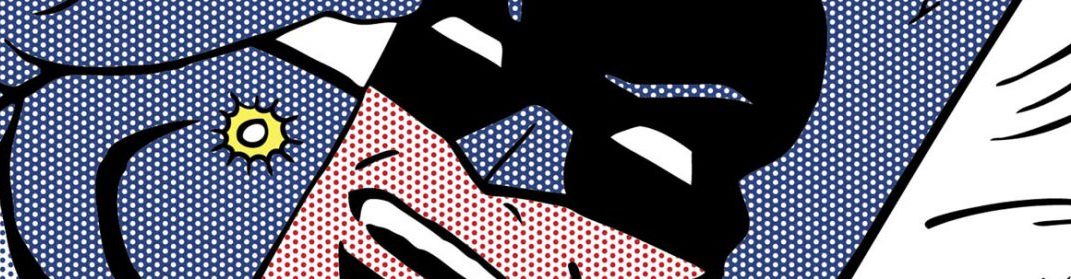
Based on the checklist at his website, this was in the earliest days of Sprouse’s penciling career. (I forgot he drew a Batman annual written by Andrew Helfer, which I will have to check out.) What’s great about it is that it is immediately recognizable as Sprouse; he apparently didn’t have to suffer through a period in his early career where he was asked to adapt to a DC “house style.” And from the jump, Sprouse’s Batman is terrific. He leaves the eyes white, creating an extra emphasis on Batman’s facial expressions. Look at this somewhat surprised Batman.

He doesn’t overdo it; it’s not exaggerated. But leaving those eyes without detail forces us as readers to rely upon the rest of Batman’s expression to interpret his mood–alert, engaged, slightly taken aback.
There’s not a lot of big visual moments in the issue, other than a terrific page where Sprouse depicts the Wayne Foundation building collapsing thanks to a criminal’s bombs.

Three vertical panels, perfectly visualizing the entire point of the conflict in the story–a crazed architecture freak who destroys newer buildings in Gotham so that the city’s oldest gothic facades are more visible.
Perhaps in a nod to the title’s intent, O’Neil does include a backward-facing moment where a flashback illustrates the Wayne family’s connection to the architectural style Gotham has developed as its trademark–which happens to be the same style Furst imagined for Gotham in his designs for the first two Batman movies. Beyond that, this is not a complicated story, although it is clever. The motivation of a villain who sidesteps his way into manslaughter by way of his passion for architecture is something different, and it connects well to the inclusion of Furst’s designs, which was definitely meant to capitalize on the ongoing Bat-fever as a world waited with breath bated for the premiere of Batman Returns in June 1992.
I enjoyed these three issues, both at the time and upon a re-read nearly thirty years later. And yet, I can’t help but recall how this moment also marked the beginning of the end for my illusions about comics. Sure, I’d happily lapped up the 1991 annuals to follow Armageddon 2001, but mess with Batman, and you’re crossing a line.
Next: Matt Wagner and “Faces”
 Oonta Goota